


Contec – MS200 Blood Pressure Simulator (Open Box)
R22 300.00 VAT Included
1 in stock
Description
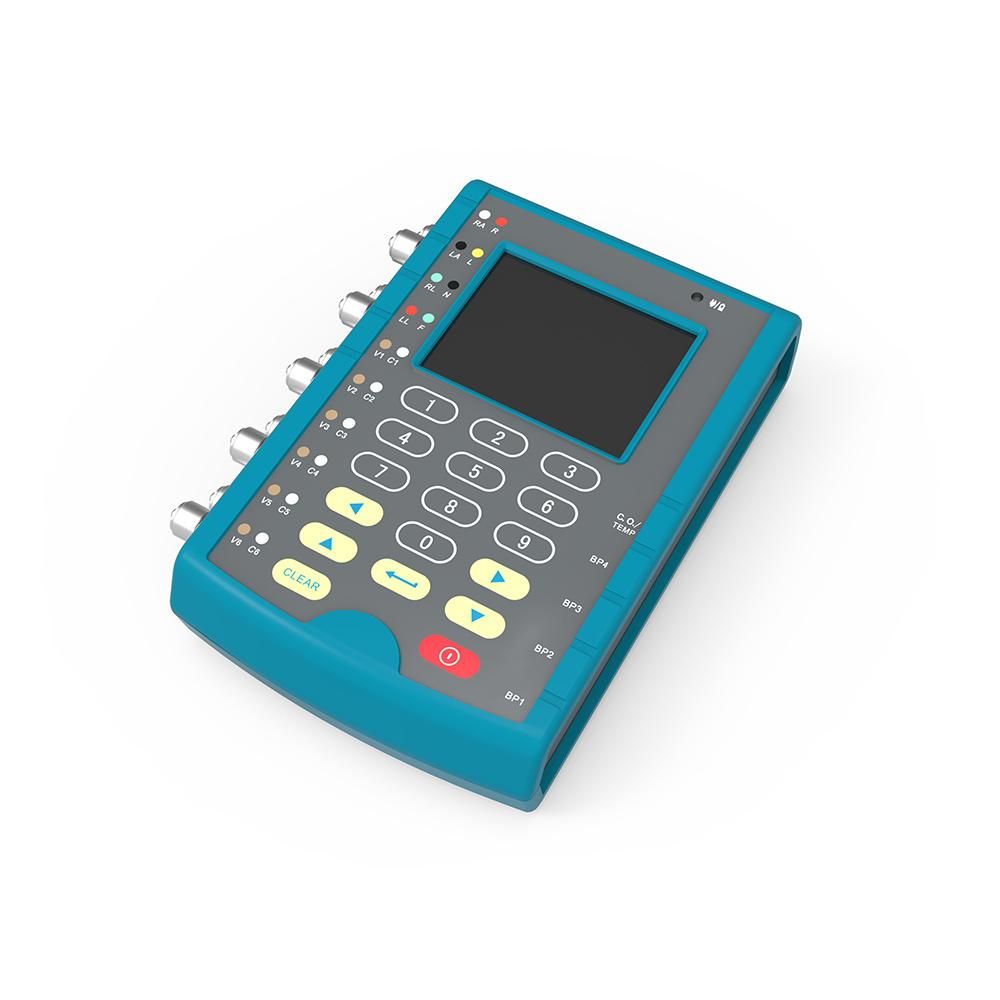
Is the CONTEC MS200 is a highly specialized NIBP (Non-Invasive Blood Pressure) Simulator.
It uses an internal air pump and built-in air chambers to mimic human arms and wrists. Biomedical technicians use it to calibrate, test, and verify the accuracy of automated oscillometric blood pressure monitors.
Core Functions & Testing Capabilities;
The MS200 is designed to test the mechanical safety and digital accuracy of NIBP monitors through four primary modes:
-
Standard BP & Patient Simulations: It simulates standard blood pressure settings (e.g., 120/80, 150/100, 60/30 mmHg) across various simulated patient conditions, including healthy, weak pulse, obese, geriatric, mild/strenuous exercise, bradycardia, and tachycardia.
-
Arrhythmia & Respiratory Interference: Can simulate complex clinical scenarios like Premature Atrial Contractions (PAC), Premature Ventricular Contractions (PVC), Atrial Fibrillation, and spontaneous or controlled breathing artifacts to see how well the monitor filters out “noise.”
-
Pressure Leak Testing: Uses its internal pump to inflate a connected cuff or tubing up to 400 mmHg and automatically measures the system’s leak rate to ensure there are no microscopic tears in the bladder or hoses.
-
Over-Pressure Relief Valve Testing: Safely inflates the monitor’s circuit to check if the machine’s internal emergency relief valve correctly opens and dumps air if pressures get dangerously high.
Key Specifications;
-
Pressure Range: Measures and generates pressure from 0 to 400 mmHg.
-
Neonatal & Wrist Support: Includes distinct, lower-volume air chamber settings to test neonatal (newborn) cuffs as well as wrist-worn blood pressure monitors.
-
Display: Features a 4.3-inch TFT color display ($480 \times 272$ pixels) paired with a tactile button keypad for manual parameter inputs.
-
Customization: Includes a “User-Defined” mode where a tech can manually type in a custom Systolic (20–300 mmHg), Diastolic (10–250 mmHg), and Heart Rate (30–250 BPM) to test specific thresholds.
Related products
-
Used – Original Philips MRX Hard Carry Bag
- R4 250.00 VAT Included
- Add to cart
-
Pneupac BabyPac C-100 Disposable Circuits
- R423.00 VAT Included
- Add to cart


